[XX%]
Labour pressure
Replace with a sourced, dated Swiss industry statistic before publication.
Placeholder — source required.
Workforce automation, made practical
We help hospitality and retail teams understand their work, build trustworthy training data and integrate physical AI around the people who make the business run.
Swiss-based. Swiss-quality.
Illustrative service description; outcomes depend on the task, environment and technology selected.
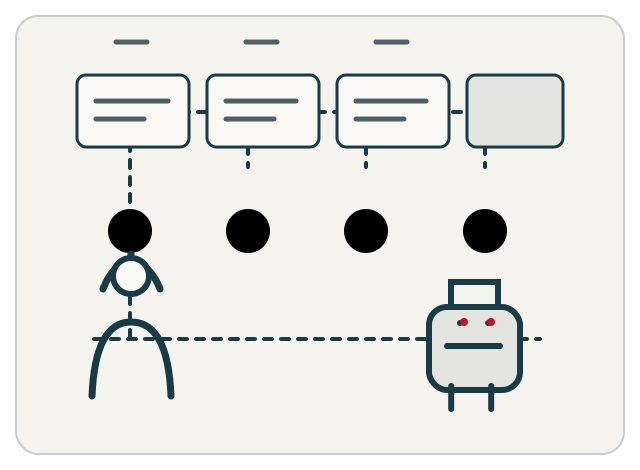
Start with the work
Rising operating pressure does not make every task a good automation candidate. Start with evidence from your own sites and teams.
Replace with a sourced, dated Swiss industry statistic before publication.
Placeholder — source required.
Understand the cost, time and variation in each repeatable task.
Illustrative placeholder — not a customer result.
Capture differences between shifts, locations, layouts and service standards.
Placeholder — replace with verified data.
A practical path
We are technology-neutral. A finding that a task is not ready for automation is a useful outcome.
Map roles, shifts, locations and timed tasks. Build a cost-per-task case and assess technology readiness.
What you get: task map, baseline, prioritized opportunities and readiness assessment.
Explore the task audit →Capture demonstrations, teleoperation, video and sensor data, or simulate tasks in your environment.
What you get: a scoped, quality-checked data plan with ownership and privacy defined.
Explore data generation →Design pilots, safety and staff onboarding with clear monitoring, KPIs and scale-up gates.
What you get: a vendor-neutral pilot plan and a route to operational adoption.
Explore integration →Clear, usable outputs
Every engagement is tailored to the operational question and the evidence available.
See the approachWhere we work
Housekeeping room reset · linen handling · amenity replenishment
Hotel tasks and opportunities →Dish return and sorting · prep transport · floor cleaning
Food-service tasks and opportunities →Shelf replenishment · backroom movement · floor and aisle inspection
Retail tasks and opportunities →Examples are illustrative; feasibility requires an assessment of each workplace.
Human-first by design
We involve staff early, make task data transparent and look for ways to reduce repetitive or physically demanding work. We do not promise that every pilot will succeed, or that technology replaces the need for good jobs and management.
“Better automation starts by listening to the people doing the work.”
Working principle — no customer quotation implied.
Why Switzerland
We aim to bring precision, neutrality, data protection and reliability to physical AI decisions, with respect for social partnership and compliance obligations.
Learn about our principles →A practical first step
Tell us about your sites, tasks and questions. We aim to reply within two business days.